

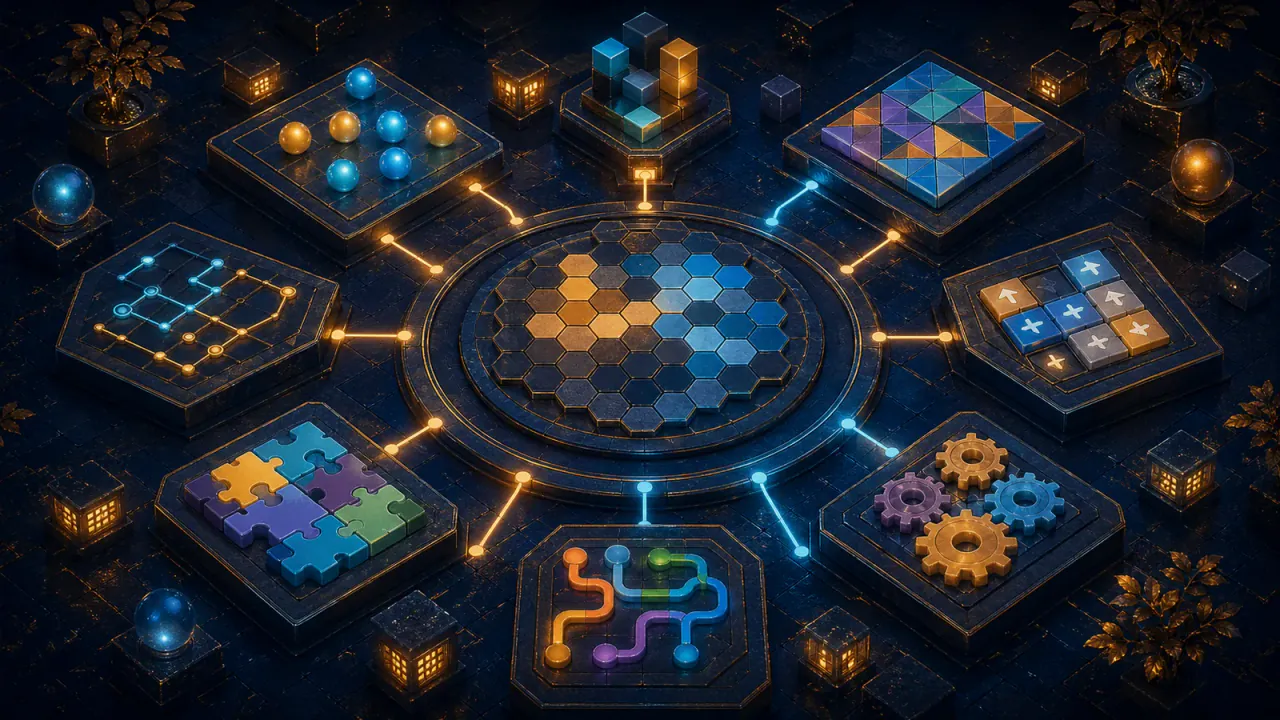
The subject family puzzle games attracts more and more players who want a simple, regular and motivating practice. Family puzzle games are more effective when you adapt the difficulty and pace to each profile.
On Kognify, the objective remains the same: to offer fun, readable and progressive formats to play in good conditions, without unrealistic promises.
Why this format is useful in practice
This type of game works well because it combines three elements:
- a clear objective at the start of the session;
- a difficulty which can increase in stages;
- immediate feedback on your choices.
In practice, this helps keep a stable pace of play. You know why you are starting the session, what you want to work on in the part, and how to adjust the next one.
How to organize a short session
An effective session doesn’t need to be long. The most useful thing is to keep a simple structure:
- 2 minutes of startup;
- 4 to 6 minutes of main game;
- 1 minute quick review.
This logic applies to both beginners and experienced profiles. It limits fatigue and facilitates regularity over several weeks.
Set a micro-goal before playing: finish a series without rushing, reduce errors or stabilize the pace.
Common mistakes to avoid
Blockages often come from method details rather than level:
- wanting to go fast too soon;
- change strategy each game;
- ignore recurring errors;
- chain together too many sessions without a break.
To move forward, it’s better to keep a simple line: precision first, speed second.
Which games to combine in a routine
A good routine alternates several mechanics:
- a logical format;
- an attention/vigilance format;
- a language or strategy format according to your preferences.
You can draw from similar content: attention games for children online/, logic games for middle school students online/, cognitive games for teachers/, reflection games accessible/.
And to build a complete session, also use the games page Kognify.
Example of weekly routine
Here is a realistic example over 4 days:
- Day 1: short session on the main format;
- Day 2: variation with a complementary game;
- Day 3: return to the main format with precision objective;
- Day 4: free session focused on gaming pleasure.
This model remains deliberately light. It is easier to keep than an overly ambitious schedule.
FAQ
family puzzle games: is it suitable for beginners?
Yes, provided you start with short sessions and a progressive level of difficulty.
What duration should you aim for per session?
Between 7 and 12 minutes is a solid base for playing regularly without overloading.
How to follow your progress?
The simplest thing is to note three indicators: rhythm, precision and perceived comfort of play.
Should you play every day?
Not necessarily. A regularity of 3 to 4 sessions per week already works very well.