

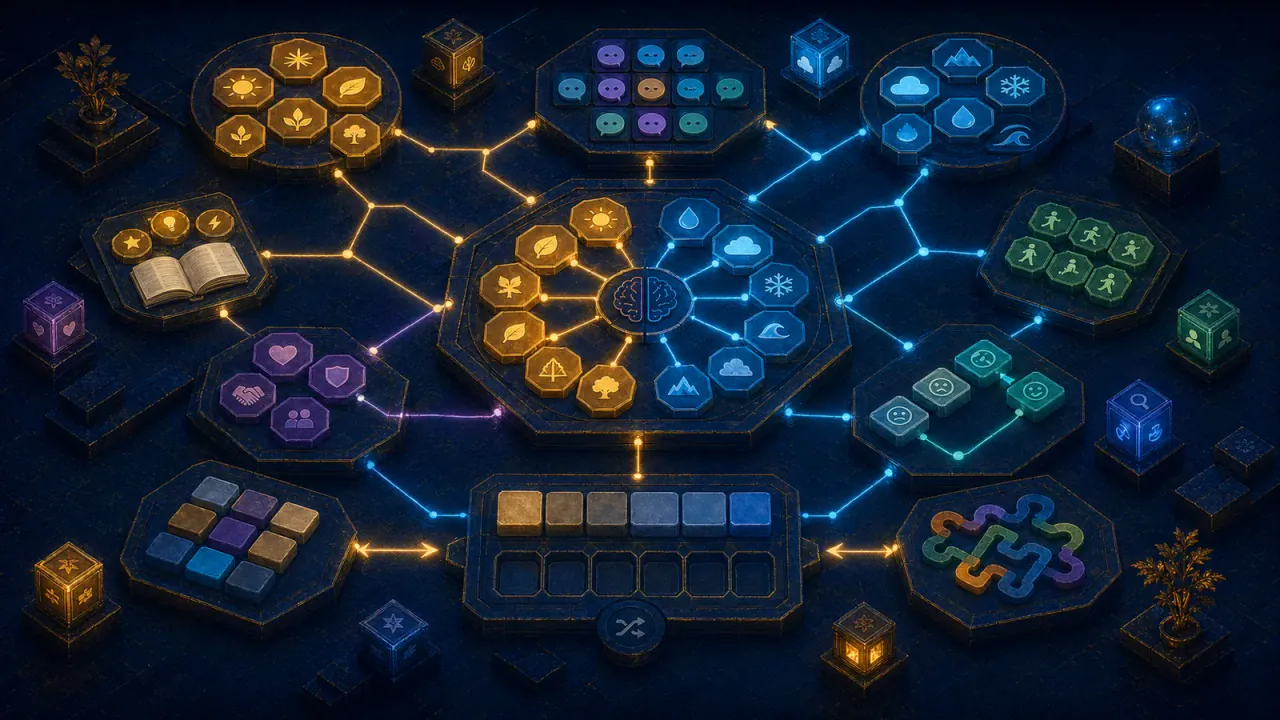
Online vocabulary games are a great format when you want to play quickly, with clear rules and short games. In a few minutes, you go from a letter challenge to a synonym game, then to an association grid.
What works best in practice: vary the mechanics, keep a regular rhythm and first aim for clean responses before looking for the time.
Why are online vocabulary games so popular?
The vocabulary is an immediate playground: you understand the instructions in a few seconds and you can start a game without preparation. It’s practical during breaks, during transport or between two tasks.
Another advantage: the formats are very different, even if they all revolve around words.
- some rely on letters (anagrams);
- others on the meaning (synonyms, antonyms);
- still others on the hidden links between several terms.
This mixture avoids routine and gives a real feeling of playful progression.
5 vocabulary game formats to test
1) Anagrams
You rearrange letters to find a word. It’s direct, edgy, and perfect for short sessions. If you want a dedicated guide, also read Free Online Anagrams.
2) Synonyms and nuances
You choose the closest word in a given context. The classic trap: several answers seem correct, but only one really fits the sentence.
3) Antonyms
Finding the exact opposite seems simple, but advanced levels play on language registers and nuances.
4) Word Connections
You group words by semantic families. This format is close to association puzzles. You can complete with Online word association games.
5) Missing words in context
One sentence to complete, few clues, and limited choice. This format rewards careful reading more than raw speed.
A simple 10 minute routine
If you want to enjoy online vocabulary games without getting distracted, use a fixed mini-plan:
- 3 minutes of anagrams;
- 3 minutes of synonyms/antonyms;
- 4 minutes of missing connections or words.
Keep the same structure for a week, then change the order. This rotation maintains the fun and avoids monotonous sessions.
Note only two indicators after each session: the number of errors and the level reached. This minimal follow-up is enough to remain regular without transforming the game into a complicated table.
Common mistakes to avoid
Most blockages come from simple habits:
- click too quickly on an “almost good” answer;
- stay on a single type of game for days;
- ignore less common words;
- want to beat your record in each game.
To play longer without frustration, alternate fast formats and more relaxed formats. You can also browse Free Online Word Games and Online Fluency Games to vary the styles.
Where to play vocabulary games online?
The easiest way is to go through the same game library in order to change format in one click. On Kognify, you find several language challenges from the French games page.Start with a short session, test two or three mechanics, then keep the ones that make you want to play again tomorrow.
FAQ
What are the best free online vocabulary games?
The most effective formats are anagrams, synonym games, word connections and short definition challenges. The ideal is to alternate several formats to keep the parts varied.
How long should you play each day?
Sessions of 8 to 12 minutes are enough to keep a regular rhythm. It's better to play a little every day than to do a long session just once a week.
Should we aim for speed or precision?
Start with precision, then gradually speed up. A clean base reduces repeated errors and makes subsequent sessions smoother.
Can you play without downloading an application?
Yes. You can play directly from your browser on mobile or computer, without mandatory installation.